
Apple absolutely will not tell you how much RAM is in an iPhone. They will hide how many milliamp hours the battery is. They won’t even reveal the clock speed of their custom chipsets — it’s not listed on the spec sheet. You can’t even turn your own damn AirPods on or off your own damn self.
And, because some people, in some markets, insist on buying almost entirely based on the specs on the box. Some companies just go to ridiculous levels goosing those specs. It’s why we see quad camera systems where, like, three and a half of the cameras are junky 2-megapixel macros. Just so they can have that number on the box.
Apple has always insisted on… spec fighting different. And I’m not here to make excuses for it, to justify it. Just to explain it. You can agree with it or disagree, and on a case by case basis. You can love it or hate it. But If you hate it, I just want you to hate smart.
No RAM for you
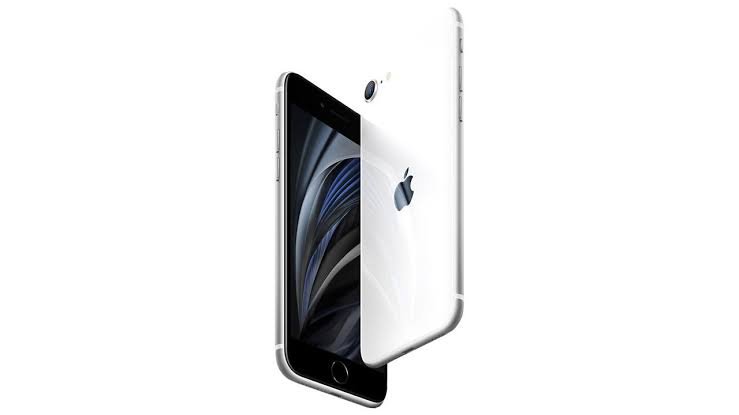
So, let’s start with the memory, the RAM. iPhones just don’t need as much RAM as Android phones. That’s the simple truth.
First, Apple makes iOS and iPhones, the whole widget, the whole stake, from silicon to icons, from atoms to pixels. So, they can optimize iOS specifically for the iPhone. Google makes Android, but a wide variety of different companies slap it on a wider variety of even more different Android phones. That means you get just a ton of options to choose from, but it also means you get a lot less optimization for each and every one of those options.
Second, for similar reasons, iOS is a native platform, and iOS Apps are native apps written in native languages, Objective C and Swift. Android is an interpreted platform, and Android apps run through virtual machines. Originally, Dalvik, now the Android Runtime, and are written in interpreted languages, Java or Kotlin. Again, more flexibility, less optimization. And that goes deeper as well, down to how iOS uses automatic reference counting and Android uses Garbage Collection, and there are pros and cons to both approaches, but Apple’s is just lighter on RAM.
Third, multitasking and memory management are surfaced differently. Both iOS and Android are full-on multitasking monsters. Steve Jobs demoed seamless native app task switching on the original iPhone. Apple has just never extended full multitasking access to third-party apps. They treat iOS like a console. And Google treats Android pretty much like a full-on traditional computer environment. So, you can run out of RAM on Android, but iOS… iOS will jettison your app with savage fury any time and every time it needs to. The bigger the app, like a game or social networking, and the more important the new task, like launching the camera, the faster and harder they get the memory door slammed on them.
And I know I got some of those technical details wrong, so just yell at me in the comments, like, tabs vs. spaces loud. Nerds.
But, basically, it’s like a tractor-trailer typically has and needs more wheels than a sports car. There’s no correct amount of wheels for a vehicle, just a sufficient amount for that vehicle to get the job done, hopefully efficiently.
But rather than just explain all that, and more importantly, risk people making bad decisions based on the number on a spec sheet, Apple prefers to just not put the number on the spec sheet to begin with.
Battery nope
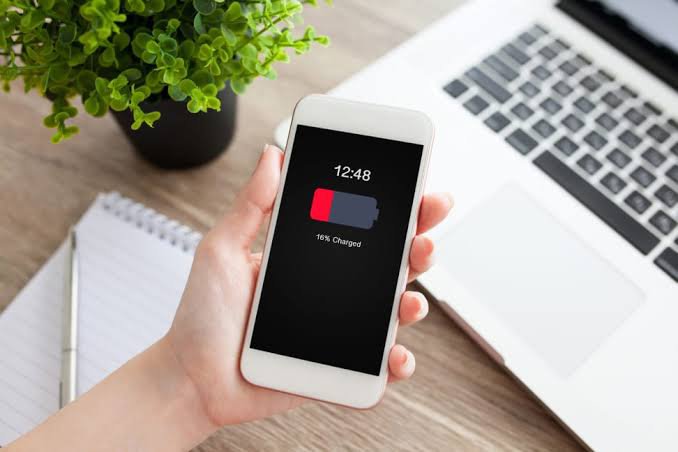
Same with battery. All of those factors I just talked about, along with the custom systems-on-a-chip, or SoCs, Apple has been making for the iPhone since 2010, mean that the iPhone puts much less demand on a battery than a typical Android phone.
And, sure, they all do things now like try to split loads between lower and higher power cores, use machine learning to enhance power management, and otherwise do everything they can to get as much life out of whatever amount of battery is available.
But pumping in more battery into a phone isn’t like pumping more jelly into a donut. Everything is a trade-off. Everything is a compromise. And batteries are hot, heavy, and not radio transparent.
So, Apple tries to lock into the life they want to deliver and then figure out how small of a battery they can get away with to deliver it.
And that means, instead of talking about battery capacity, or milliamp hours, where they look small, Apple only talks about battery efficiency, or usage hours, where it tends to scale well by device size.
Clocked out

Same with clock speed on those SoCs. Apple routinely fields, core for core, some of the fastest processors on the planet. Fastest in mobile and, straight out the M1 gate, in the running for desktop already as well.
But they never, not ever talk about clock speed. Because, for them, it’s just an implementation detail. The highest frequency they can run at given the thermal envelop of the device they’re inside. And when that changes from an iPad to a Mac, they let the frequency go up, and when heat has saturated the whole stack, they turn frequency down.
But unlike other companies, Apple won’t just pump voltage in to goose frequencies and force performance at the expense of heat and power consumption. If given a choice, if they could increase efficiency and battery life a lot by giving up absolute performance numbers a little, that’s a trade-off the silicon team will absolutely make… 12 times out of 10.
And that means other companies can and will post higher core counts, higher frequencies, higher all the things but performance efficiency. So, while Apple is absolutely not above bragging about being so damn fast, they don’t want to get into the weeds of… speeds and feeds.
They don’t want to get stuck arguing over the nebulous benefits of non-meaningful numbers. They’d rather have inarguable experience benefits.
It all boils down to the same reason AirPods, even the AirPods Pro and brand-new AirPods Max, don’t have power switches.
 TechWith_Gautam